There are literally hundreds of balance configurations of helicoids and catenoids that lead to small genus screw motion invariant surfaces. Today we will look at two balance configurations of purely helicoidal type (+,-,-,-). The first one is host 17:
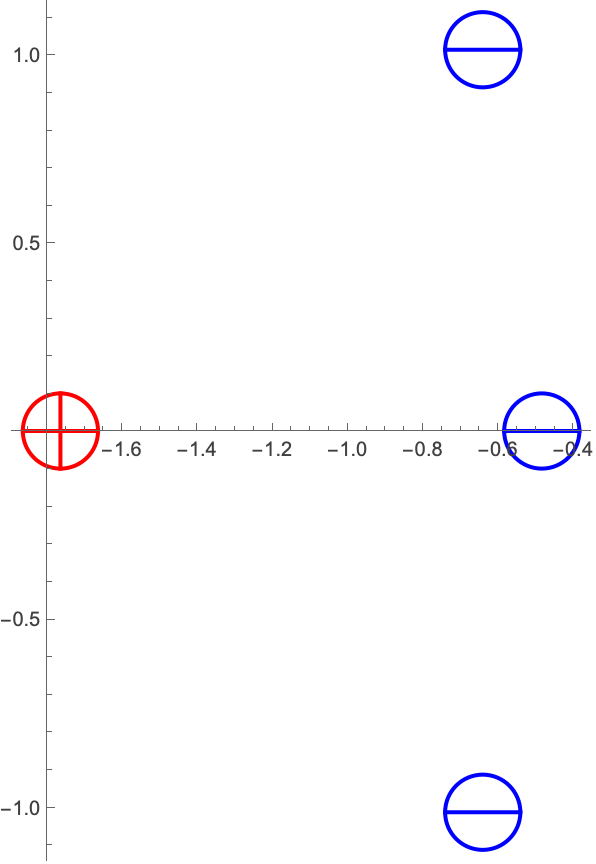
It regenerates into a genus 3 quotient. The local existence is guaranteed by Daniel Freese’s theorem, but everything that follows is pure numerics, meant to shape intuition. Below are the untwists to 90º and 125º. The indicated straight lines are factual, not just observed.
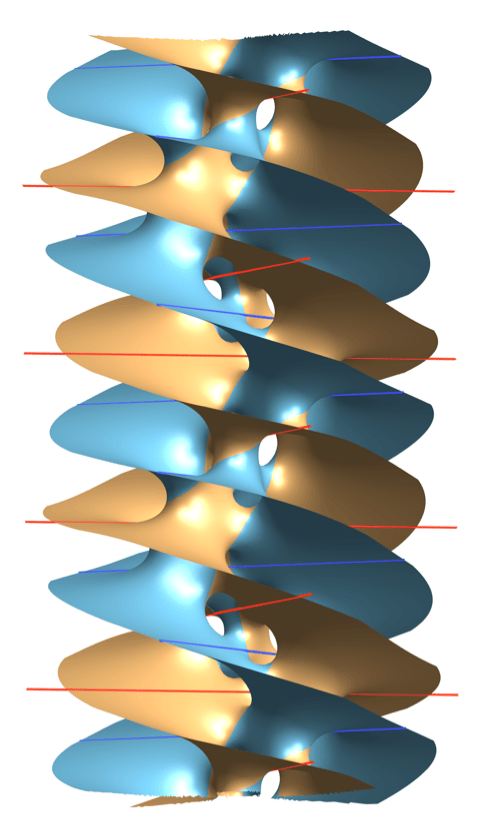
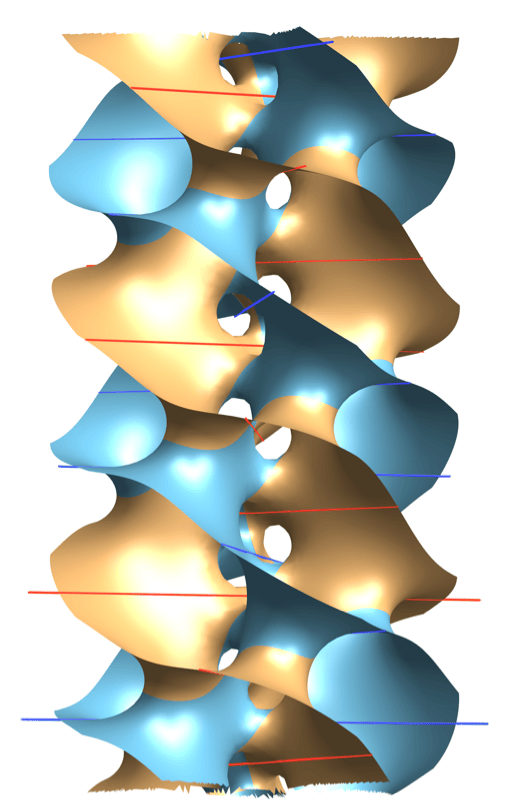
The next one is at 133º and highly complex:
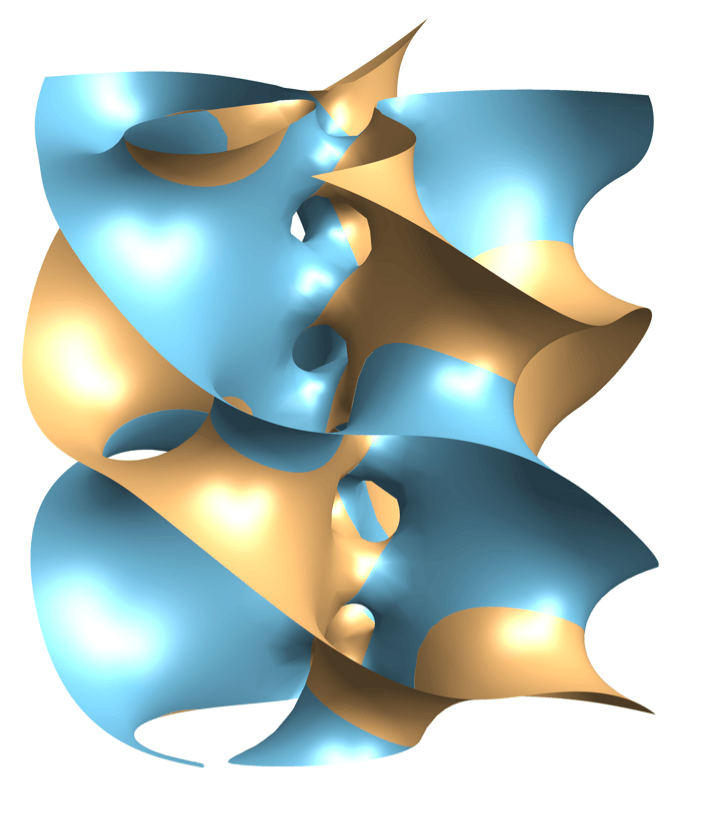
When twisted further to 142º and 144º, we start losing topology:
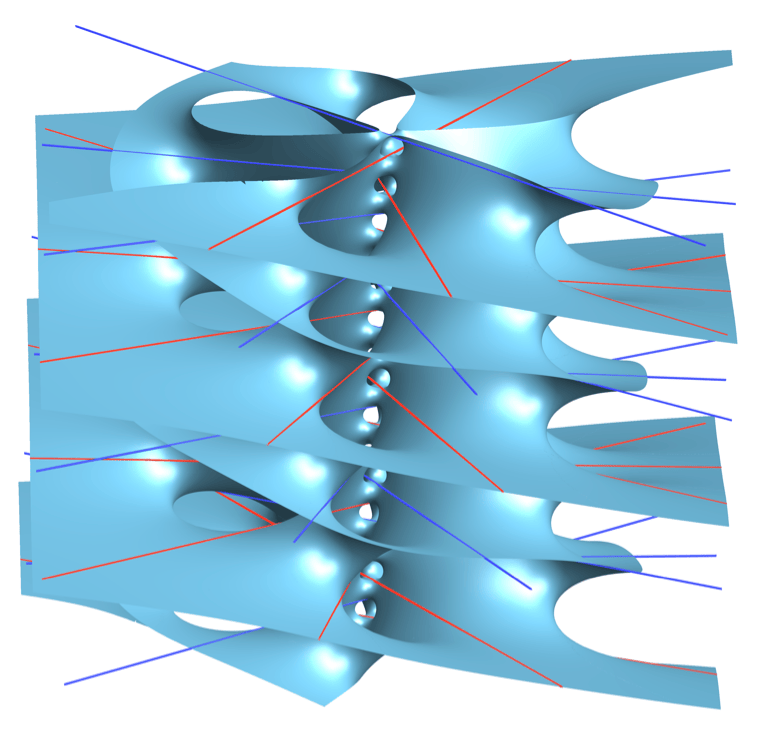
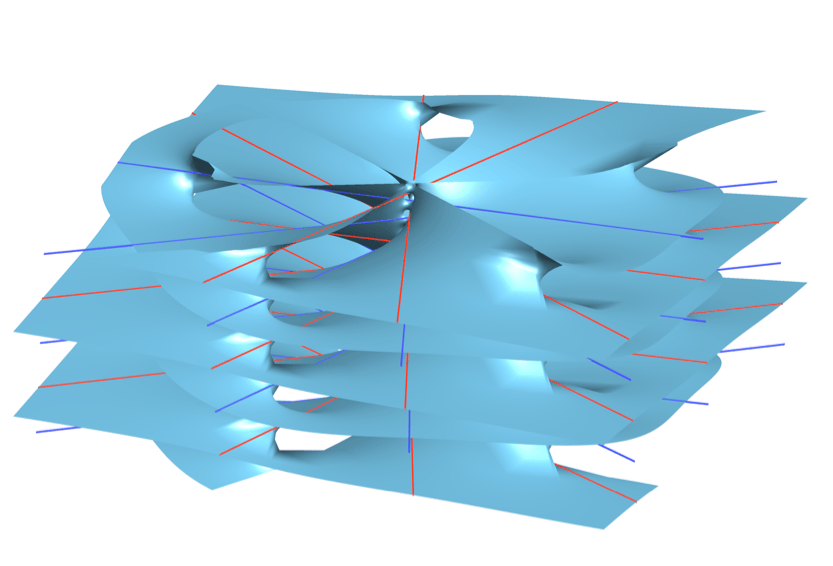
The current conjecture is that five symmetrically placed helicoids bubble off while the remaining core is a genus-zero, six-ended twisted saddle tower with a height-one 24-degree screw.
Our next host 16 also begins at a similar helicoidal type (+,-,-,-) configuration:
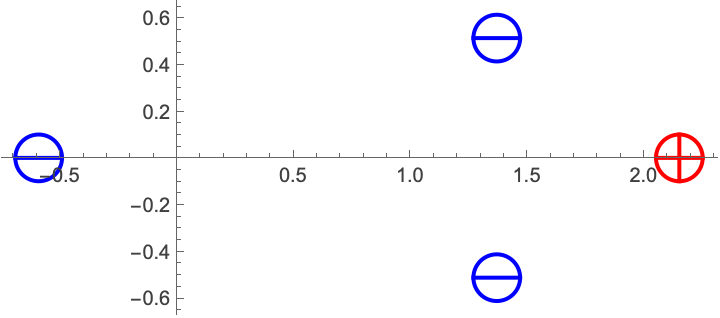
Below are the untwists to 50º, 60º, 90º, and 120º. I haven’t tested for straight lines yet.
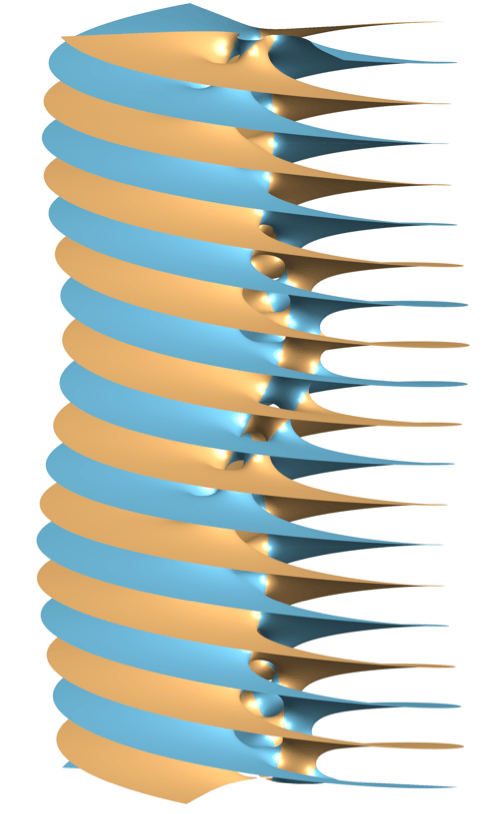
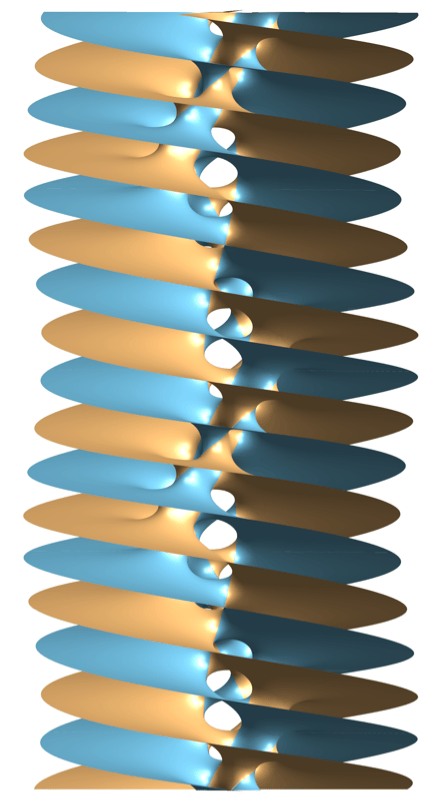
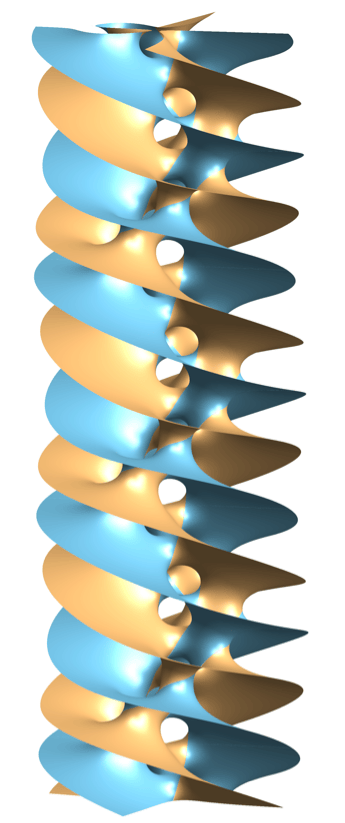
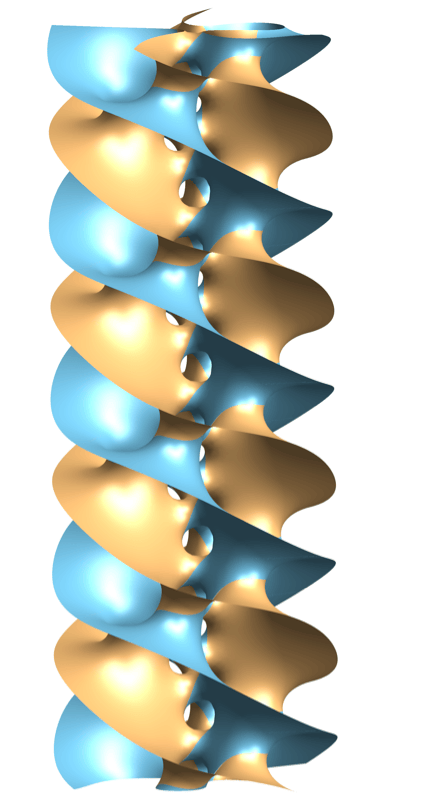
At the moment, we don’t understand yet what the future will bring in general or in this case, but each of these experiments inches us forward. Below are the last computed untwists, at 139º and 142º.
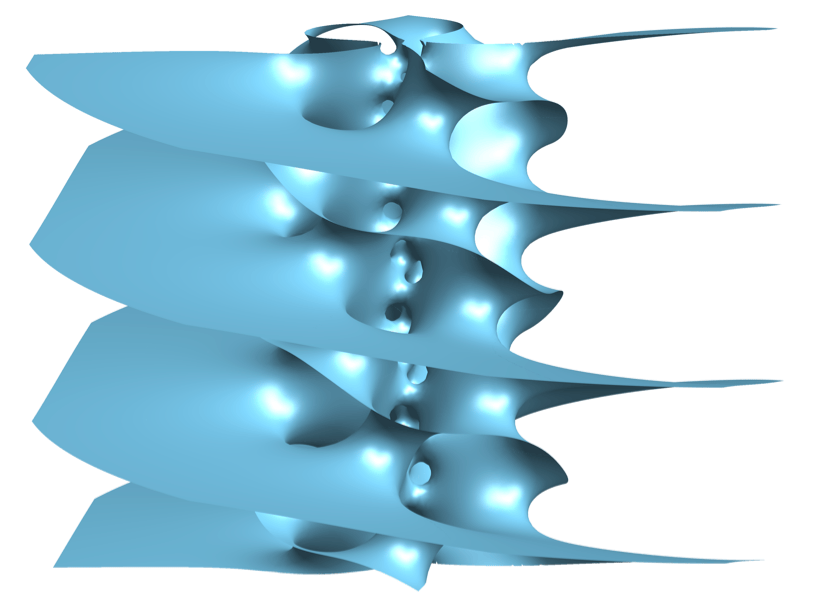
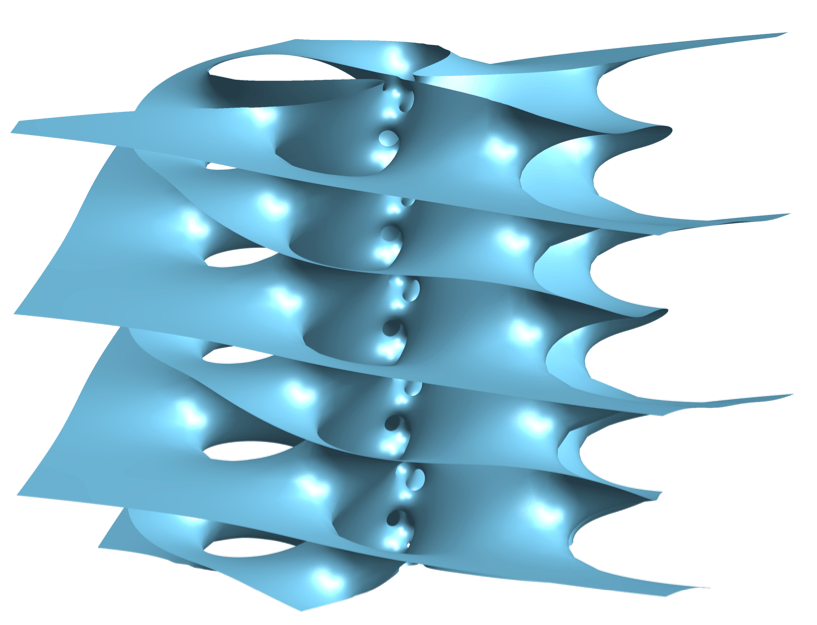
The last image suggests the bubbling off of a single helicoid to the left, with a core of yet unknown topology remaining. This post will be updated as soon as more information becomes available …


