Let’s start today with the following balance configuration of 4 helicoids with spin -1 and 2 catenoids, like so:
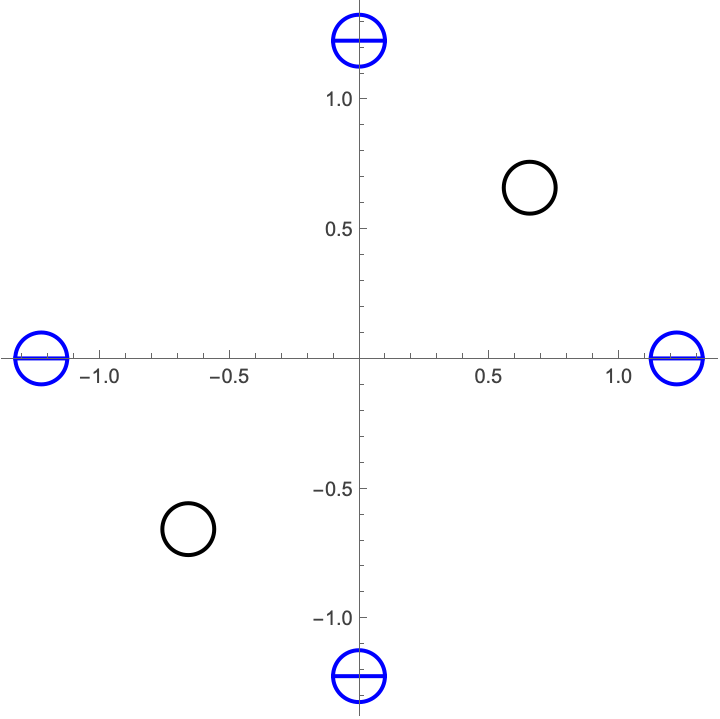
We will denote this configuration by C2H–4. A small regeneration at 1º still shows the nodes:
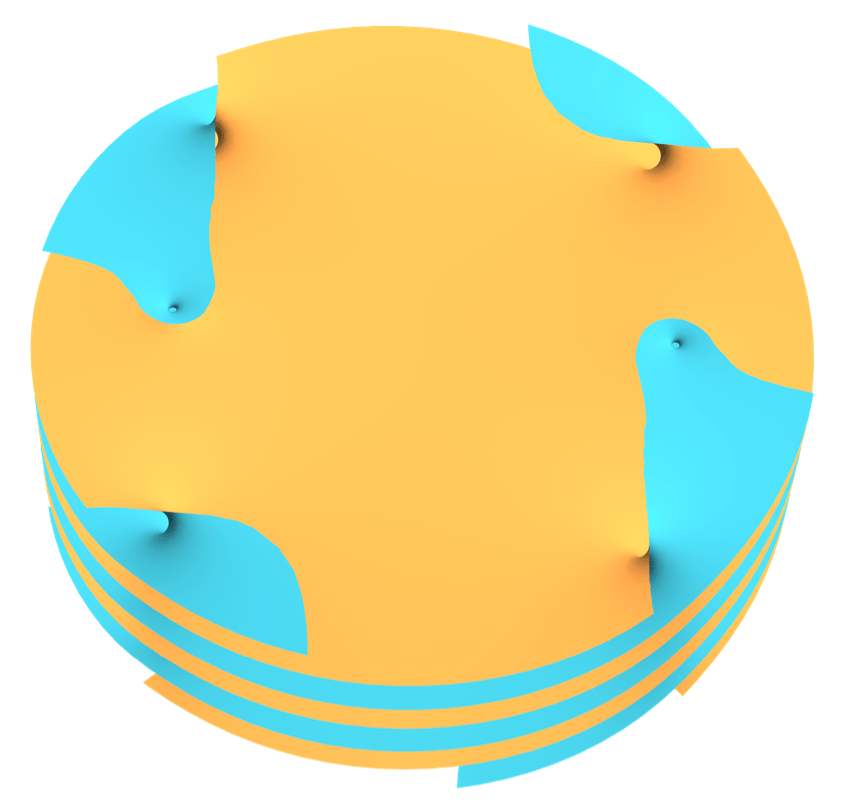
Then we keep untwisting to 30º, 45º, and 90º:
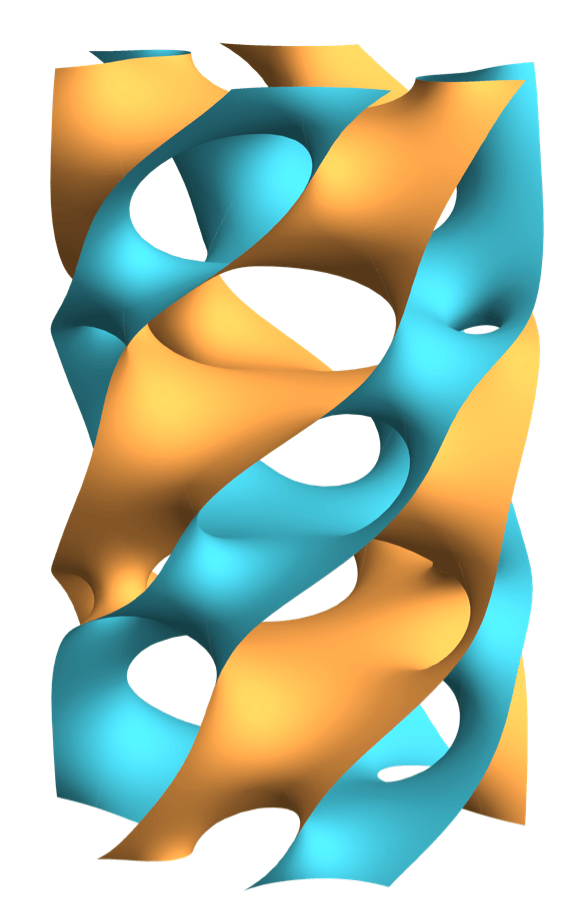
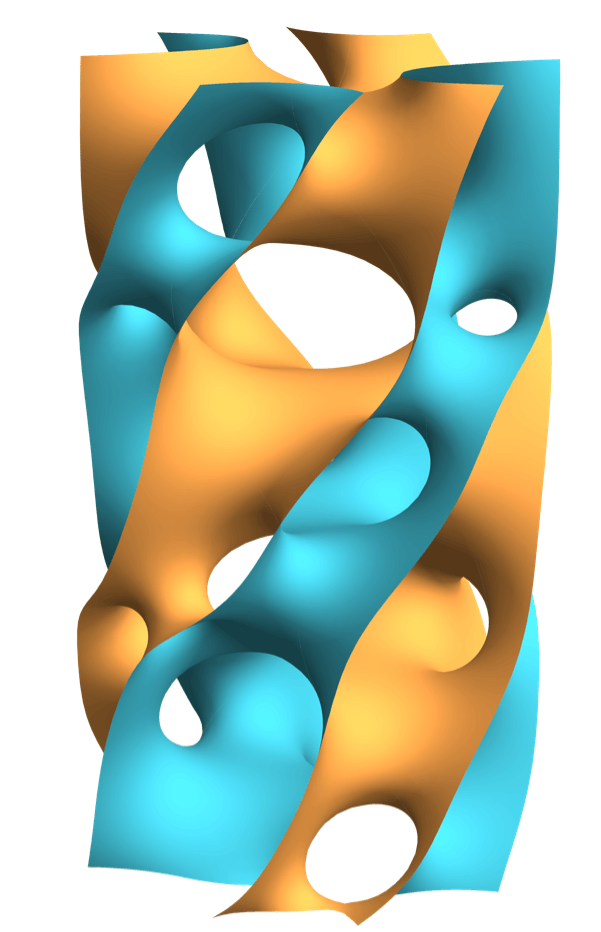
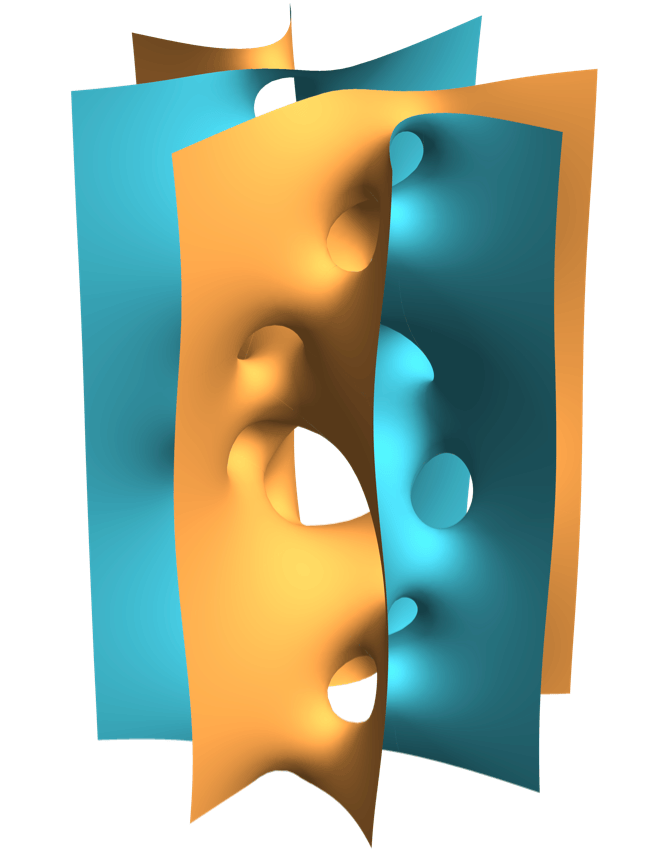
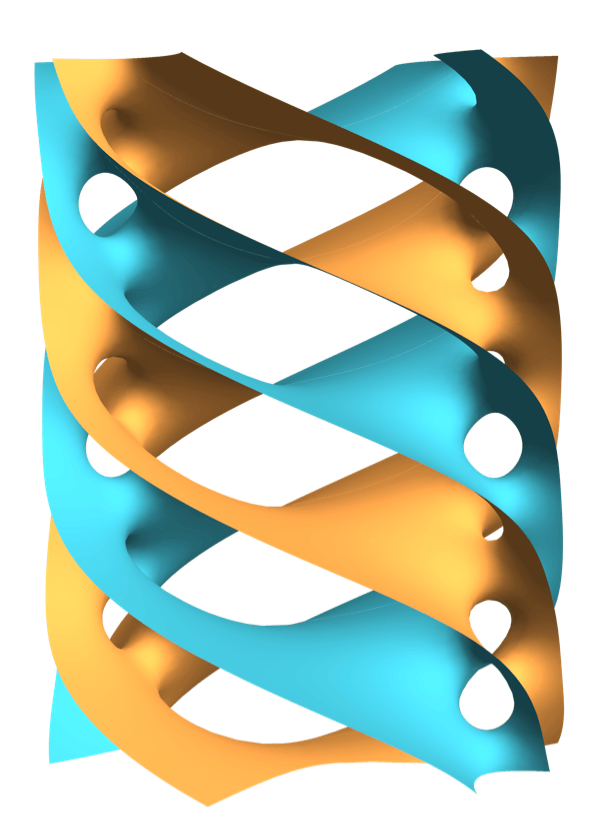
The surface at the right has annular ends now, but it is no surface I have seen before. We can twist further. At 165º, two components start to drift apart. At the moment, I don’t know what they become:
There are similar ‘molecules’ with higher symmetry. Here is C3H–6:
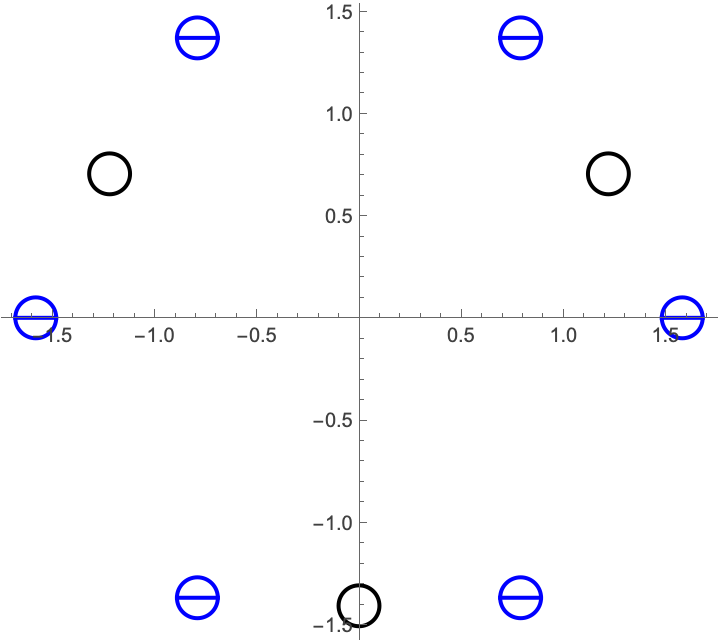
It regenerates at 60º to another annular-ended surface:
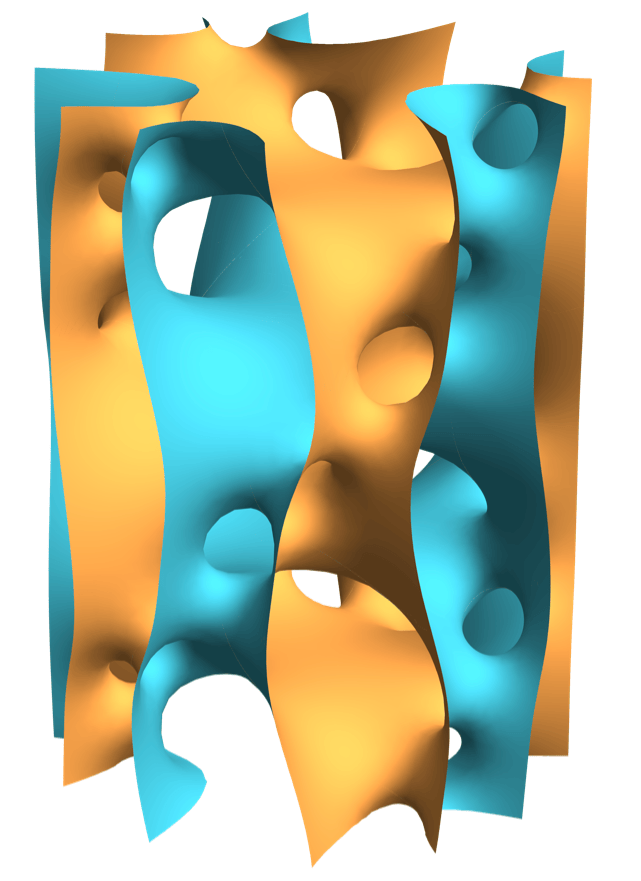
And we can keep going. Here is C4H–8:
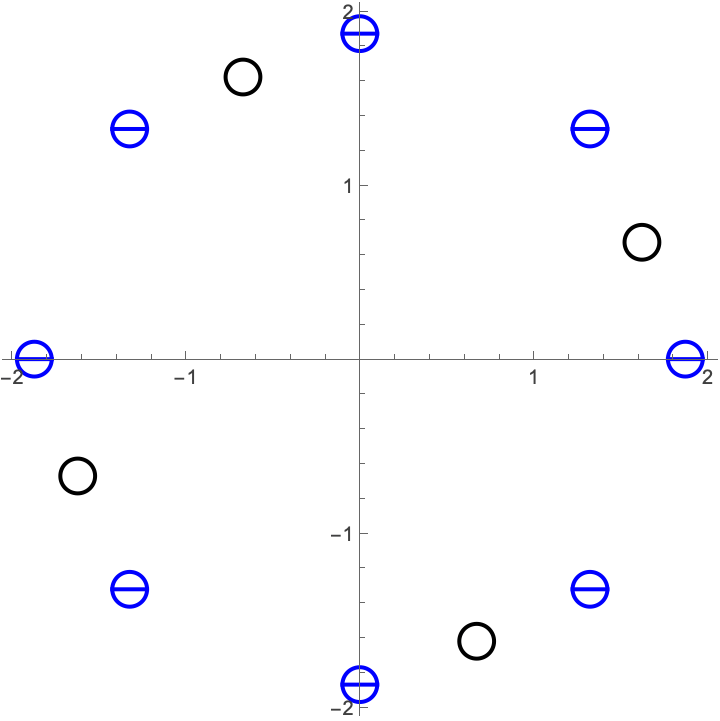
At 45º it becomes:
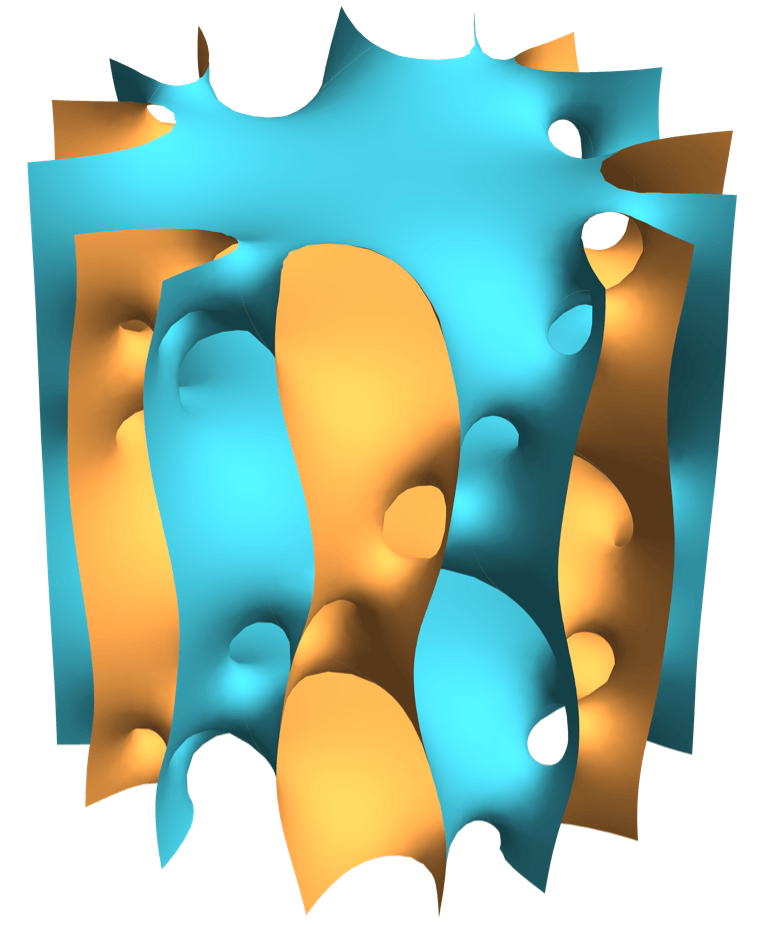
These balanced configurations CkH–2k exist for any k>1. It is currently unknown whether they all regenerate to an annular end surface, and what happens to them at the far end of their regeneration. All results are numerical so far (except for the locally embedded regeneration). We also have numerical experiments for balanced configurations CkH–km, but they show a different behavior. To be continued…


