The contour used to construct the triply periodic helicoid can be deformed, of course:
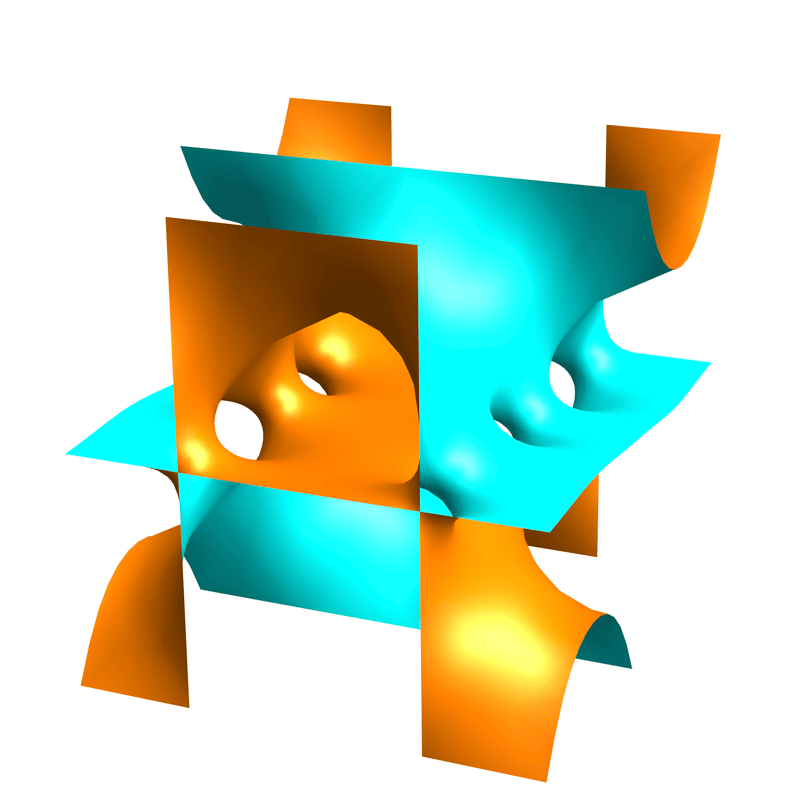
When rotated so that the y-direction becomes vertical, the surface reveals one of its secrets: It can also be understood as an end-to-end gluing of singly periodic Scherk surfaces with different frequencies.
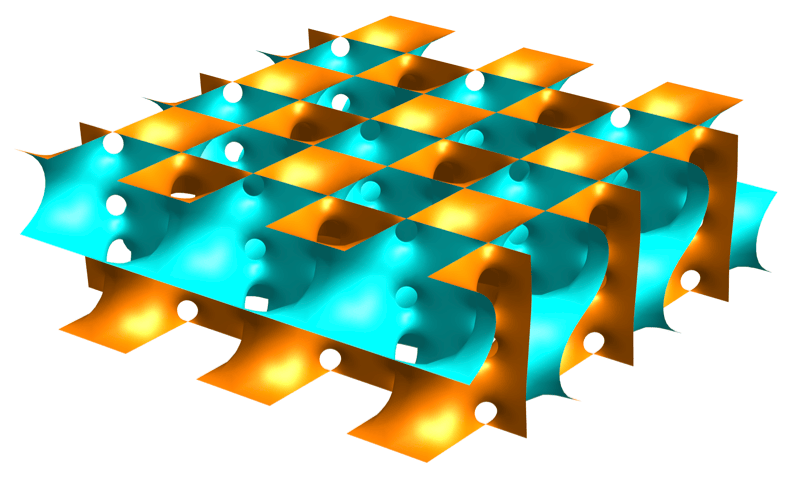
The gluing pattern is slightly different from the much simpler genus 4 surface that I had known for a while.
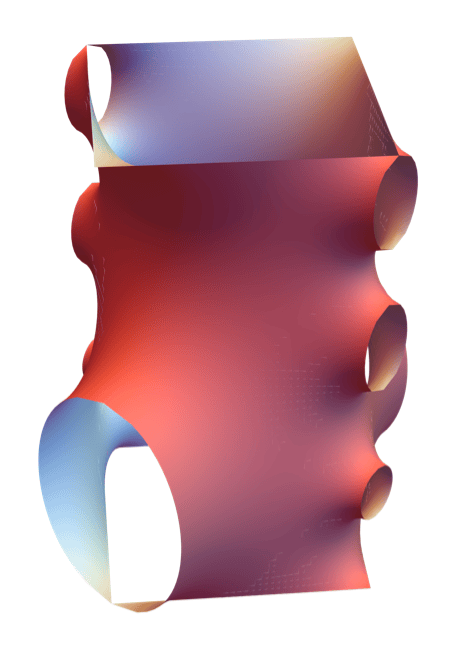
Understanding the surface this way suggests to stretch it further (now vertically)
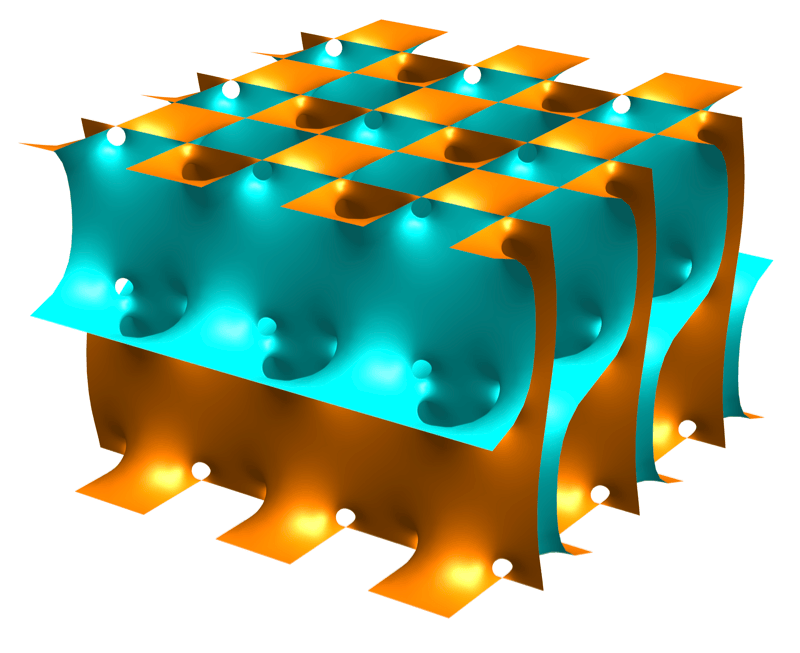
so that in the limit it becomes doubly periodic of genus 3:
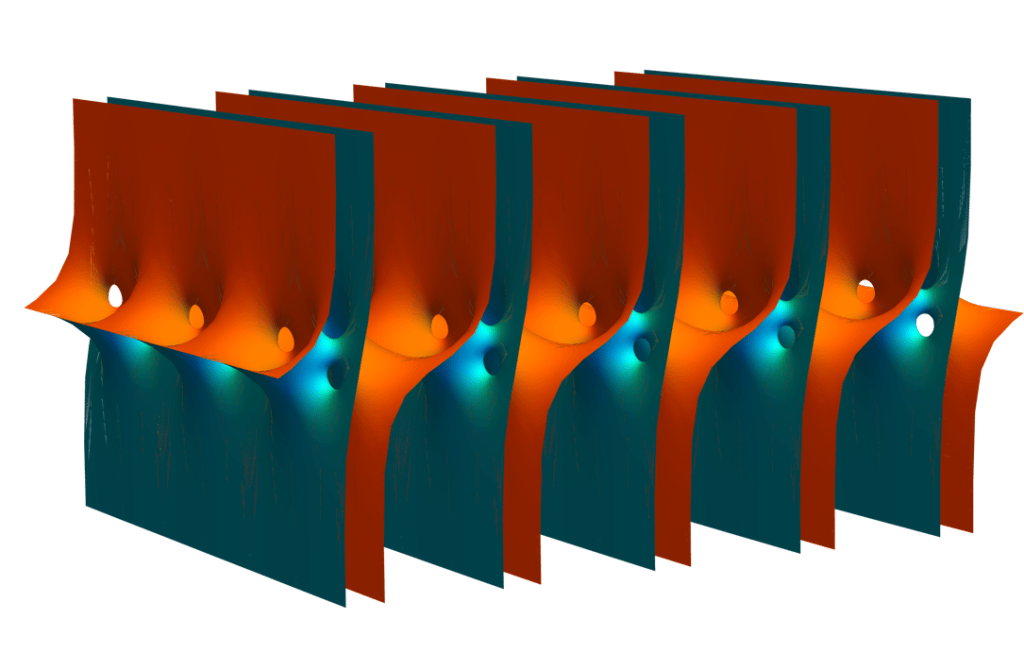
The geometry becomes easier to grasp when looking at the building blocks:
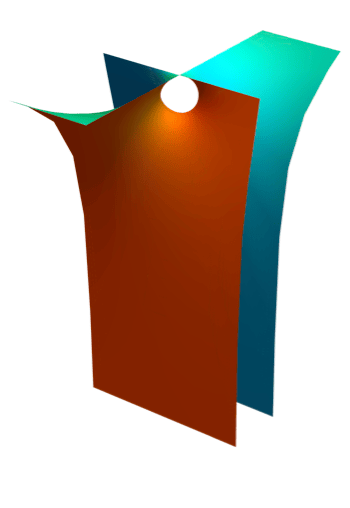
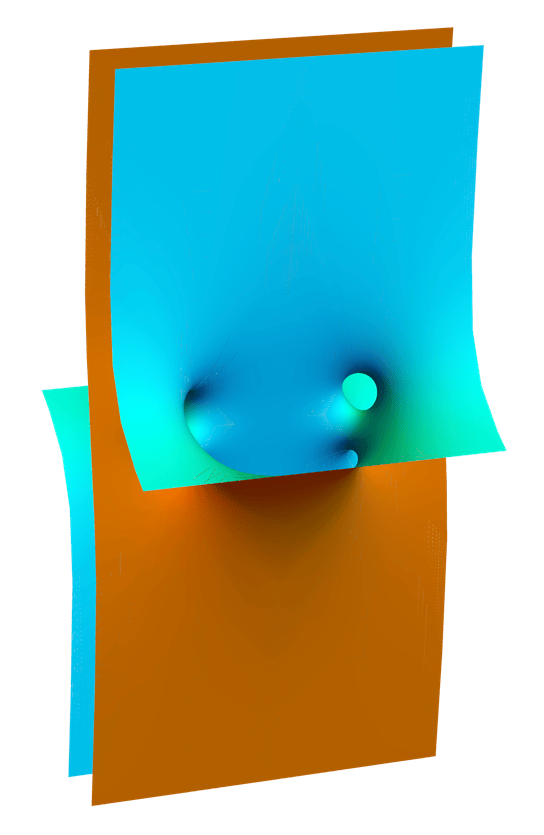
Here is an open question: Doubly periodic minimal surfaces with parallel top and bottom ends appear to be much richer (or overpopulated) than those with orthogonal top and bottom ends. What other examples are there besides the doubly periodic Karcher-Scherk surfaces?
This is joint work with Carlos Cardona and GTP Codex 6.1. A detailed exposition with supporting material is here.


